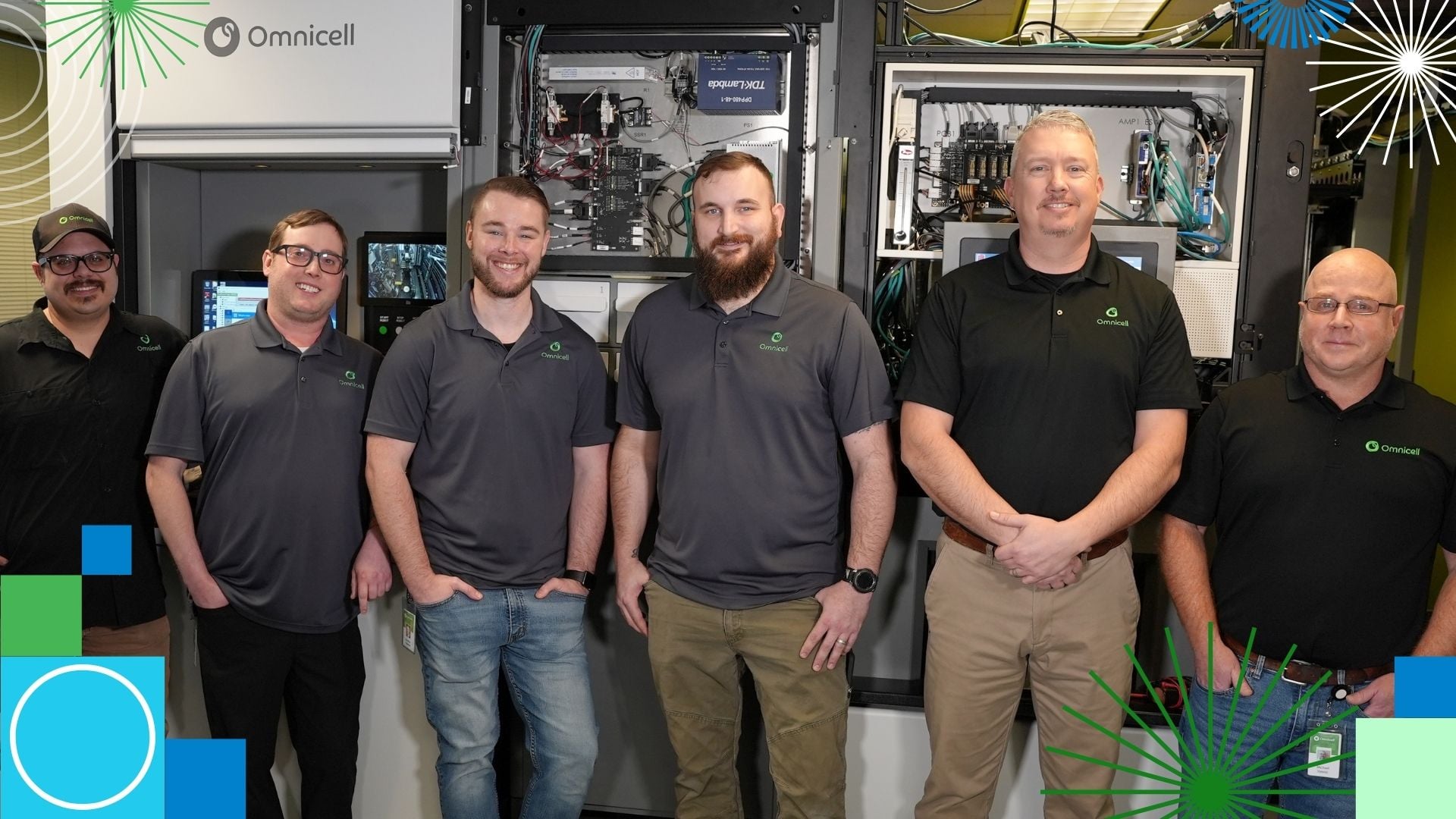
When Gage Gimbus joined Omnicell’s technical support team in February 2020, he wasn’t planning on a career in field service. His background was in IT, where he managed service delivery and helped customers solve technical issues.
When a former colleague who had already joined Omnicell suggested he take a look at the company, the hardware caught his eye. But it was the mission that convinced him to apply.
"I looked at the job description. I looked at the core values. I just liked everything that we embody here: patient safety, setting the standard for the autonomous pharmacy. I really like all of it."
Gage started in technical support before moving into a newly created Critical Incident Manager role. From there, he became a Field Services Manager primarily supporting the regions around Pennsylvania and West Virginia.
Over the years, he's learned that technical skills are only part of the job.
Today, while he helps keep hospitals running, one of his biggest priorities is helping his team grow.
From Individual Contributor to Leader
Like most leaders, Gage didn't start out managing people.
His approach to leadership was shaped by mentors, coworkers, and more than 20 years as a volunteer firefighter. Along the way, he learned that leadership isn't about authority. It's about helping people succeed.
“Hard work’s been instilled in me at a very early age. You can teach our operations. You can teach our policies. Work ethic is something that can’t be taught. It’s up to the leadership team to unlock people’s potential.”
That belief shapes how he leads every day.
“I empower my team to make their own decisions. They don’t need to feel micromanaged by me. We hire adults, let’s treat them like adults.”
For Gage, success isn't measured by his own accomplishments. It's measured by the growth of the people around him.
One conversation with an engineer still sticks with him. During a performance review, the employee told him they'd never had a manager who advocated for them the way Gage had.
His answer was simple.
“It’s our job to get you to the level or get you to that next step in your career.”
Gage representing his firestation in his local parade.
What Field Service Really Looks Like
If you're thinking about a career in field service, Gage won't pretend it's easy.
Hospitals never close. Equipment problems don't wait for business hours. Priorities can change in a matter of minutes.
But that's also what makes the work rewarding.
“No single day is the same.”
The job takes flexibility, communication, and good time management. It also means knowing when to ask for help.
He tells every new engineer the same thing:
"Don't think that you need to Superman this job by yourself."
People often think field service is all about fixing equipment. Gage sees it differently.
“As long as you have the friendly ability to go to the customer and de-escalate situations, that’s what’s going to set you up for success.”
In a hospital, every issue feels urgent. Staying calm can be just as important as knowing how to use a multimeter or troubleshoot a robot.
“If you can come in there calm and collected, you’ll have the knowledge from the training teams. But if you go in there nervous, that’s not going to set anybody up for success.”
Learning Never Stops
Gage came into field service from the software side of the business, but he never saw that as a disadvantage.
Instead, he looked for every chance to learn.
He took courses through Omnicell University, learned from subject matter experts, and got as much hands-on experience with the equipment as he could.
Now he encourages his team to do the same.
Whether it's advanced robot training, software fundamentals, or leadership development, he's always looking for ways to help engineers prepare for what's next.
“Little by little, a little becomes a lot.”
He believes small wins add up over time. That's why he encourages engineers to document their accomplishments, build new skills, and keep moving toward their next goal.
From Firefighter to Fire Preventer
Gage sees a lot of similarities between volunteering as a firefighter and working at Omnicell.
Both are about helping people during difficult situations. Both require calm decision-making. And both are becoming more focused on prevention than reaction.
“We want to start being more fire preventers instead of firefighters in this role.”
That mindset shapes the way he thinks about field service.
Fixing problems matters but preventing them matters even more.
When hospitals stay up and running, clinicians can stay focused on caring for patients.
"Knowing that our teams are in and out of the hospital fixing those service requests means that their operations are back to good."
That's what makes the work meaningful for Gage.
Helping customers succeed, helping engineers grow, and knowing that every repair, every coaching conversation, and every relationship ultimately helps support patient care.